What a Standby Generator Installation Actually Involves
A generator installation is a lot more than bolting a machine to a slab, here's what goes into it.
September 10, 2026 · 4 min read
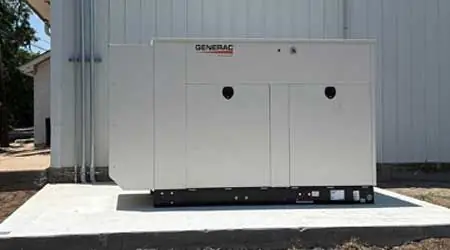
More than the machine itself
A standby generator sits outside on its own pad, but the machine is the smallest part of the decision. Before it ever runs, the installation needs a level pad to sit on, a route for the fuel line if it runs on natural gas or propane, and a transfer switch that ties into the house's own electrical panel. All of that work happens around the generator, not inside it.
That's also why two generator installations can look completely different from the street even when the machines themselves are identical. The pad size, the trench path, and the transfer switch location all depend on where the panel sits and how the property is laid out.
The pad and the trench
The generator needs a stable, level surface set back from the house per the manufacturer's own clearance requirements, and it needs conduit run underground between the unit and the house for both the electrical connection and, often, the fuel line as well. That means a trench across part of the yard, which gets backfilled once the work is done and can be reseeded afterward. Where the unit actually sits also matters for noise and airflow, not just for convenience.
The transfer switch is what actually protects your house
The transfer switch is what keeps the generator from ever backfeeding power into utility lines while a lineman might be working on them during an outage, and it's what automatically switches your house's circuits from utility power to generator power when the utility goes down. This is not optional equipment bolted on for convenience, it is the piece that makes the whole system safe to operate at all.
Sizing the generator to the load, not the house
The size of a standby generator is driven by the list of circuits it needs to carry, not by the square footage of the house. Two houses of the same size can need very different generators if one owner wants to run the whole HVAC system and the other is content with the furnace blower and a window unit. This is why the load list gets built before the generator gets sized, not the other way around.
Fuel source affects the installation as well. A generator that runs on natural gas ties into the same gas service already feeding the house, which usually means a smaller footprint of new work since the gas line already exists somewhere on the property. A propane-fueled unit needs its own tank, sized and placed according to the same clearance rules that govern the generator itself, which adds another piece to the site plan before installation day.
Deciding what runs during an outage
Most homes don't power everything in the house off a standby generator, they power a chosen list of circuits, because sizing a generator to run an entire house at once is rarely necessary. That's a conversation about priorities that happens before the equipment ever gets ordered.
- Well pump or water pressure system, if the house isn't on city water
- Refrigerator and freezer
- A portion of the HVAC system, or at least the furnace blower
- Selected lighting circuits and outlets
- Sump pump, where the house has one
Building that list is also where an electrician looks at what's already on the panel, since a circuit chosen to run during an outage still needs a path from the transfer switch back to the panel just like it does under normal power. A late addition to the list after installation usually means additional wiring, not just a setting change.
What keeps a generator working when you finally need it
A standby generator that sits unused for months at a time needs regular exercise cycles, usually run automatically on a schedule by the unit itself, along with periodic checks of the battery, the fuel supply, and the transfer switch. Oklahoma's ice storms and summer line outages tend to arrive with little warning, which is exactly why the maintenance matters more on a machine you might only truly need a handful of times a year.
A generator with no exercise cycle and no maintenance checks can fail at the exact moment it's needed, which defeats the purpose of having one installed at all. The unit's own automatic testing schedule handles most of this without anyone needing to remember it, but it only works if the generator is left connected to fuel and power the way it was installed, not disconnected or bypassed afterward.
If you're deciding what should run during an outage, that's worth talking through with our team before you order anything. Call 918-225-4500 or visit /contact.
Award Electrical Service, Inc., 918-225-4500
Call 918-225-4500More articles
Your Panel and Your Meter Base Are One Decision, Not Two
In an older Payne County house, the breaker panel and the meter base are one job, and neither one gets upgraded without the other.
What Actually Happens When We Rewire a House You're Still Living In
A rewire doesn't mean moving out, it means the work happens in stages so the house stays livable the whole time.