Your Panel and Your Meter Base Are One Decision, Not Two
In an older Payne County house, the breaker panel and the meter base are one job, and neither one gets upgraded without the other.
September 10, 2026 · 4 min read
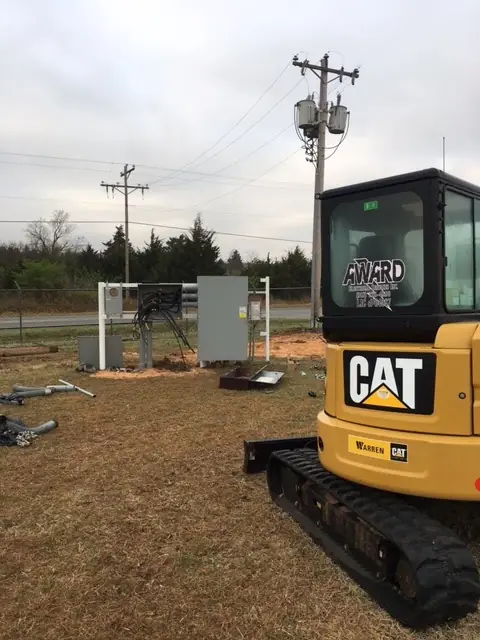
What the service actually means
In an electrician's mouth, the service does not mean just the box with the breakers in it. It means the whole path electricity takes from the utility company's wire, through the meter base bolted to your house, into the main panel, and out to the branch circuits that feed every outlet and switch inside. All three of those pieces, the drop or underground lateral, the meter base, and the panel, are rated to work together at one amperage. Raise the panel's capacity without touching the meter base and you have created a mismatch that gets caught at inspection, and the utility will not energize it.
Most houses built in Payne County before the 1980s were wired for a smaller load than modern households actually use. A panel from that era was often sized for lights, a refrigerator, and maybe a window unit. It was never built with central air, an electric range, a garage full of tools, and a house full of chargers in mind, because none of that was the expectation when it went in.
Signs your service cannot keep up anymore
A service that is too small for the house rarely fails all at once. It shows itself in small, repeated ways that get written off as quirks of an old house, right up until they aren't.
- Lights dim noticeably when the air conditioner or a well pump kicks on
- Breakers trip when two larger appliances run at the same time, like a microwave and a hair dryer
- The panel still uses fuses, or breakers that are decades old and hard to source
- The cover plate on the panel feels warm to the touch
- There is any sign of rust, scorching, or a burning smell near the meter base or panel
Any one of these on its own is worth a look. More than one together usually means the service itself, not just a single circuit, is the actual problem.
Repair, replacement, or upgrade
Those three words get used loosely, and mixing them up is how a project gets quoted wrong from the start. A repair fixes one failed part, a bad breaker, a loose lug, a cracked panel cover, without changing what the service can carry. A replacement swaps the panel or meter base for new equipment rated at the same amperage as what was there before, usually because the old equipment is worn out or a discontinued brand rather than undersized. An upgrade is different again, it raises the total capacity of the service itself, which is the only one of the three that touches the size of wire coming in from the utility and very often the meter base along with it.
Knowing which of the three you actually need before work starts saves a round of confusion later. A house with a tired but correctly sized panel needs a replacement. A house that trips breakers because the load has outgrown what the panel was ever rated for needs an upgrade, and that is a different scope of work with the utility involved from the start.
Why the meter base and the panel move together
The meter base is sized to the same amperage as the panel it feeds. A 100 amp meter base cannot safely or legally carry a 200 amp panel, so an upgrade that touches one without the other has only done half the job. This is why a service upgrade covers both pieces even when only the panel looks old. The meter socket, the conduit or mast running up the outside wall, and the grounding electrode system all get evaluated together, because a mismatch anywhere in that chain undermines the whole upgrade.
The utility company is part of this job too
A service upgrade is not something an electrician finishes alone. The utility has to disconnect power at the meter before any of this work can be done safely, and they have to inspect and reconnect once the new equipment passes. That means scheduling has two calendars in it, ours and theirs, and a homeowner should expect the house to be without power for a stretch of the day while the disconnect, replacement, and reconnect happen in sequence.
That planning matters for anything in the house that depends on continuous power. A chest freezer full of food, a sump pump during wet weather, or medical equipment that needs to stay on are all worth mentioning when we schedule the work, so the outage window gets planned around them rather than discovered partway through the day.
What the visit itself looks like
We start by opening the existing panel and meter base and checking the amperage stamped on both, the condition of the grounding, and the wire gauge feeding the panel from the meter. From there we walk the house and talk through what is actually running on the circuits today versus what was there when the house was built. That conversation is usually what decides whether a house needs a straightforward like-for-like replacement or a genuine capacity increase.
Once the new panel and meter base are in and the utility has reconnected service, the work still needs a final inspection before it is considered finished. That inspection is part of the process, not an extra step tacked on afterward, and it is what confirms the new service is wired the way it is supposed to be before everyone walks away.
If your panel is decades old, or you simply don't know what size service your house has, call the office at 918-225-4500 and we'll walk you through what to check first.
Award Electrical Service, Inc., 918-225-4500
Call 918-225-4500More articles
What Actually Happens When We Rewire a House You're Still Living In
A rewire doesn't mean moving out, it means the work happens in stages so the house stays livable the whole time.
What a Standby Generator Installation Actually Involves
A generator installation is a lot more than bolting a machine to a slab, here's what goes into it.