What Actually Happens When We Rewire a House You're Still Living In
A rewire doesn't mean moving out, it means the work happens in stages so the house stays livable the whole time.
September 10, 2026 · 3 min read
Why most rewires happen with the family still home
Very few homeowners can move out for the weeks a full rewire takes, and most don't need to. A rewire is staged by circuit and by room, not done to the whole house at once, so the parts of the house not being worked on that day keep power the whole time.
The exception is a house that's already gutted for a full renovation, where the walls are open for other reasons and staging by circuit isn't necessary because nothing needs power in that section anyway.
How we stage the work
We break the house into zones, usually by circuit or by the area of the attic or crawlspace the wiring actually runs through. One zone gets opened, rewired, and closed up before the next one starts. That means the kitchen might lose power for a day while the living room keeps running, then the order flips the next day. The house is never fully dark, but any single room might be for a stretch of it.
What gets opened, and what gets patched
Old wiring almost always runs inside the walls and through the attic or crawlspace, so reaching it means cutting small access openings in drywall near outlets, switches, and junction boxes, then patching those openings once the new wire is pulled and connected. We cut only what we need to reach the wire path, and we patch every opening we make before we leave that area. Patching electrical work means patching the drywall itself, not painting it, so a final coat of paint or texture match is usually left to the homeowner or their own painter.
Protecting the rest of the house while we work
Opening walls and running new wire creates dust and debris in a way that plumbing or paint work usually doesn't, so we lay down floor protection and dust barriers around the work area before cutting into anything. Furniture near the access points gets moved or covered rather than left exposed. None of this eliminates the mess of a rewire entirely, drywall dust travels, but it keeps it contained to the rooms actually being worked rather than spreading through the house.
What you'll lose access to, and for how long
Expect specific rooms or circuits to be without power for the day they're actually being worked, not the whole house for the whole job. Expect some furniture to get pulled away from walls near outlets. Expect a stretch of the project where an attic hatch or crawlspace access stays open longer than usual. None of this means the house is unlivable, it means certain rooms or routines move around for a few days at a time rather than the whole project happening at once.
Why remodeling and additions are the cheapest time to rewire
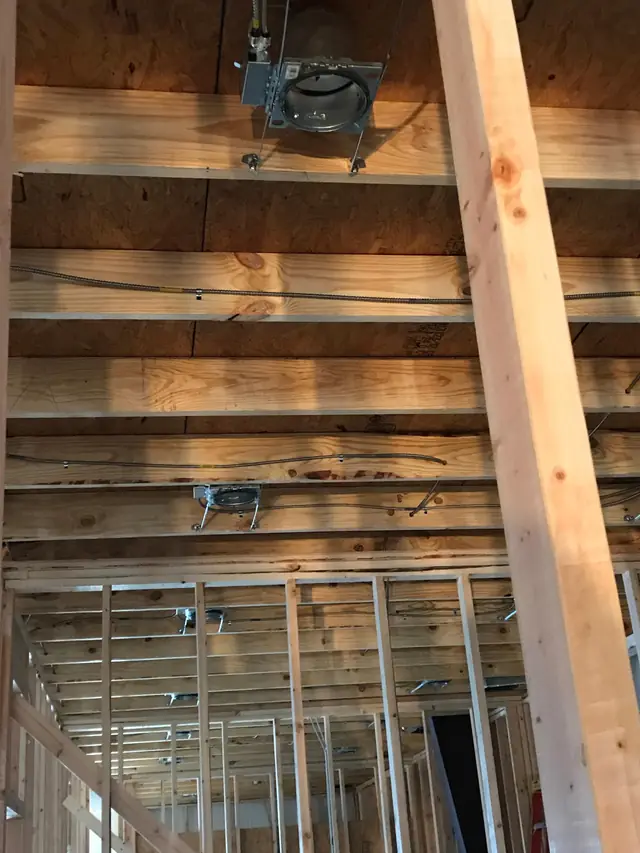
The single biggest cost in any rewire is opening walls that are otherwise finished, so if a wall is already open for a remodel, an addition, or a kitchen renovation, that is the moment to run new circuits or replace old wiring behind it. Waiting until after the drywall goes back up means paying to open the same wall a second time for work that could have happened while it was already open.
This is also why a rewire quote for a house mid-remodel often costs less per circuit than the same work done to an otherwise finished house afterward. The labor of opening and patching drywall is a real portion of the total cost, and a remodel has already absorbed that cost for its own reasons.
How the panel itself fits into a rewire
A full rewire almost always means the panel gets touched too, since new circuits need breaker space and old circuits get reterminated at the panel as they're replaced. That part of the work happens with the main breaker off, which is the one time the whole house genuinely loses power rather than just a zone of it, and it's usually scheduled for a short window rather than left open-ended.
What we ask you to plan around
We walk the house with you before work starts and mark out, room by room, which day it loses power and what needs to move. Most households find it easiest to plan meals, laundry, and any work-from-home days around that schedule rather than trying to work around us as we go.
If you're planning a remodel and wondering whether the wiring behind that wall is worth touching while it's already open, that's a conversation worth having before the drywall goes back up. Reach the office at 918-225-4500.
Award Electrical Service, Inc., 918-225-4500
Call 918-225-4500More articles
Your Panel and Your Meter Base Are One Decision, Not Two
In an older Payne County house, the breaker panel and the meter base are one job, and neither one gets upgraded without the other.
What a Standby Generator Installation Actually Involves
A generator installation is a lot more than bolting a machine to a slab, here's what goes into it.